Astro A50 Gen 5 vs A50 X
Same graphene drivers and the same 24-hour battery. The $80 gap is the base station, not the headset.
The Astro A50 Gen 5 and the A50 X are the same headset class on different docks. Both use 40mm PRO-G graphene drivers, both weigh 363g, both quote about 24 hours, and both charge on a magnetic base. The Gen 5 is $299.99. The A50 X is $379.99. You are paying $80 for how the base talks to the TV.
Do not buy the X because a spec sheet called it the flagship. Buy it if an HDMI switch is a problem you already have.
Astro A50 Gen 5
Astro A50 Gen 5
As an Amazon Associate, we earn from qualifying purchases. This helps support our detailed gear research and guide creation at no extra cost to you.
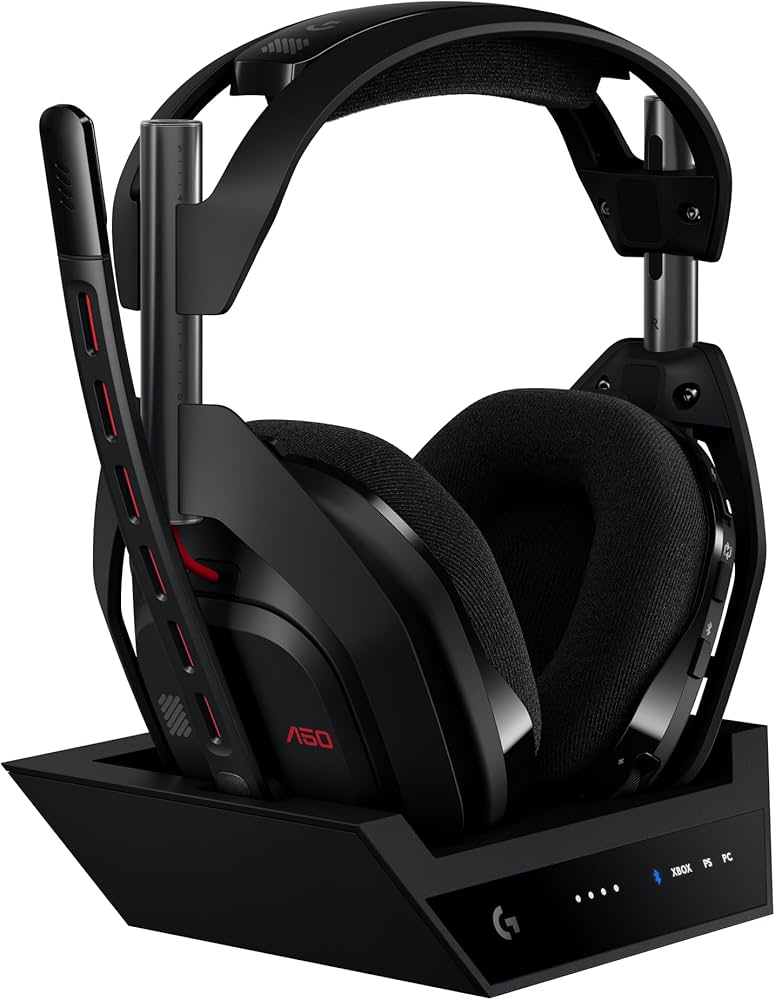
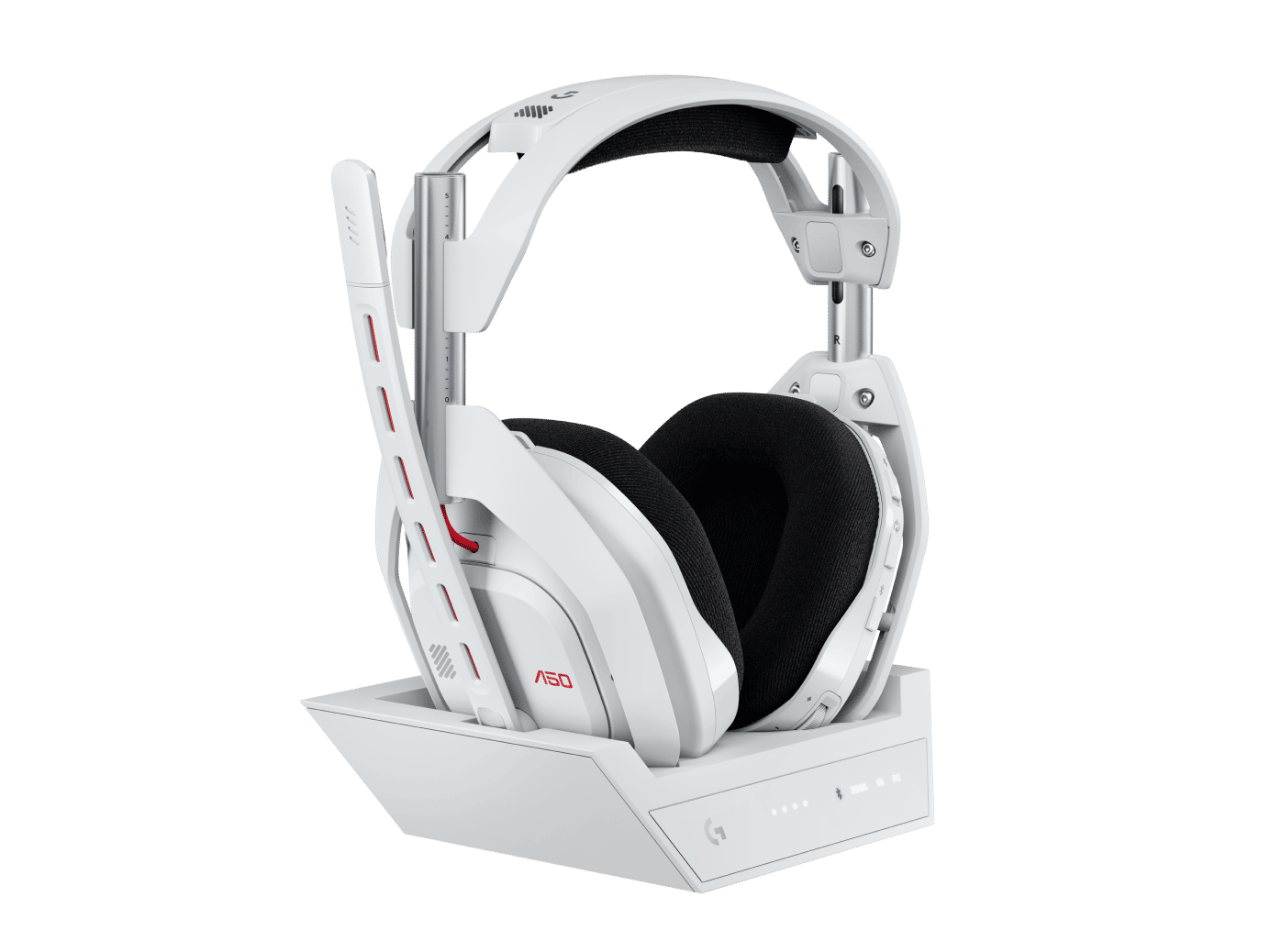
The Gen 5 base is PLAYSYNC over USB-C. Three ports sit on the dock, typically Xbox, PlayStation, and PC, and one button swaps which USB audio stream the headset hears. The TV input stays where you left it. You change that yourself.
Listed latency is 20ms over LIGHTSPEED. The mic is a fixed boom sampled at 48 kHz. A USB-C port on the earcup charges the headset off the dock, so a dead battery does not end the night.
Logitech G Hub handles firmware and EQ, including the Footsteps preset, and the dock has to be happy before that app is useful. A blinking base is a firmware desync, fixed by seating the headset and resetting, not by buying the other model. The Gen 5 is not an HDMI product. Pages and answers that describe the Gen 5 as the HDMI 2.1 hub are describing the A50 X.
Astro A50 X
Astro A50 X
As an Amazon Associate, we earn from qualifying purchases. This helps support our detailed gear research and guide creation at no extra cost to you.
The A50 X base is an HDMI 2.1 switch with magnetic charging. Xbox and PlayStation go in over HDMI, one cable goes to the TV, and PLAYSYNC changes audio and video together. The passthrough is specified for 4K/120Hz, VRR, and ALLM, which only holds if every cable in that path is a real Ultra High Speed HDMI cable. Listed latency is 16ms. HDMI audio extraction is how the console path gets a 24-bit stream instead of a plain USB audio device.
Bluetooth can stay up beside LIGHTSPEED, so a phone call does not require undocking the headset. The three charge pins on the dock are picky about alignment. If the bolt LED is not pulsing, reseat the earcups so the headset sits level before you assume the battery is dead.
G Hub is still the firmware path. It is Designed for Xbox. It is not native Xbox Wireless, and it is not a dongle you toss in a bag.
What does not change
Driver size, driver type, weight, closed-back shells, and the 24-hour battery rating are shared. Neither set approaches the Maxwell 2’s 80 hours or the Cloud III Wireless at 120 hours. Twenty-four hours is a day of heavy play, then the dock. Both mics are fixed booms. You are not getting a retractable ClearCast or a detachable HyperX mic in this comparison.
Graphene here is a coating and diaphragm choice for speed and clarity, not planar magnetic resolution. If the purchase is about detail at the expense of comfort, the Maxwell 2 is the other conversation, at 560g and $329. If the purchase is about Xbox with nothing in the USB port, neither Astro qualifies.
Which one to buy
Buy the A50 X if Xbox and PlayStation share one TV and you want a single button to move picture and sound. The $80 is the switcher, the 4K/120 passthrough, and the slightly lower listed latency.
Buy the Gen 5 if you already have an HDMI switch, you play on one screen with USB audio, or you do not want HDMI cables in the headset dock. You keep the graphene drivers, the magnetic charge, and multi-platform USB switching.
Skip both if you own one console and only needed wireless audio. A Nova 7X Gen 2 at $199.99 or the official Xbox Wireless Headset at $109.99 does that job without an $80 dock decision. Skip both if 24 hours and a fixed mic are already the complaints you have about your current premium headset.

Richard Scott
Headset Expert & Web Developer
Web developer and lifelong gamer. Spends too much time on golf, hockey, and finding the right headset. Lives with a dog who has no opinions on audio quality.