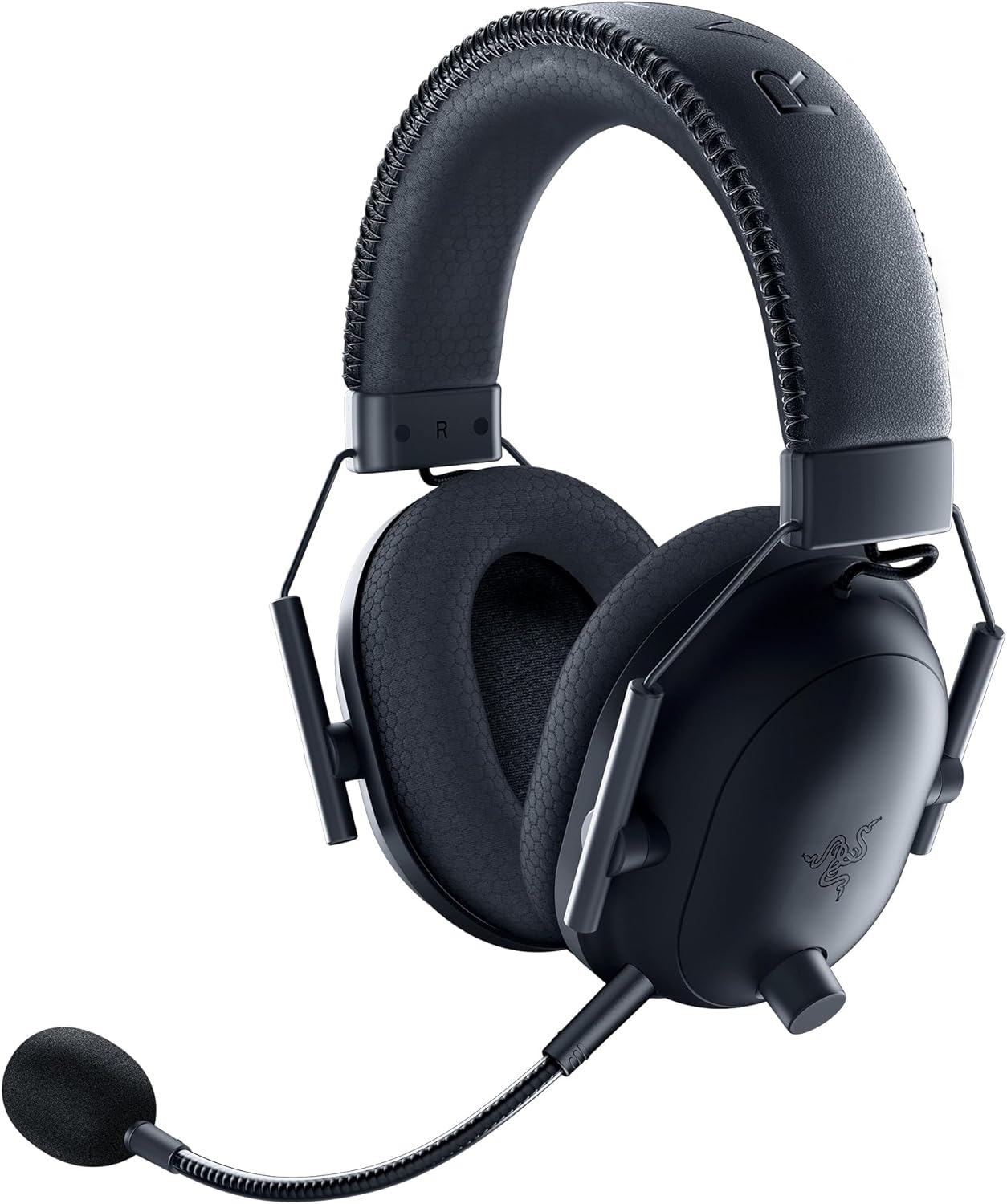
Razer BlackShark V3
Ultra-lightweight wireless esports headset with 10ms latency, 50mm titanium-coated drivers, super wideband mic, and 70-hour battery life for competitive gaming.
- Wireless
- 50mm Dynamic Drivers
- Detachable Boom Mic
- 270g
*Affiliate Link: We may earn a commission from qualifying purchases.
Community Evaluation
Performance Tiers
Community consensus based on aggregated review data.
Fit Recommendation
Optimized for ergonomic comfort over long sessions.
Based on long-term clamping force, headband expansion, and cup depth volume.
Review Consensus
Aggregated from 581+ verified sources.
Technical Specifications
Audio
Connectivity
Microphone
Build & Features
Overview
The Razer BlackShark V3 is a wireless esports headset built for competitive gaming with industry-leading 10ms ultra-low latency via HyperSpeed Wireless Gen-2. Released in July 2025 at $149.99, it sits between the budget V3 X HyperSpeed and flagship V3 Pro, delivering essential competitive features without the premium price. At just 270 grams with 70-hour battery life, it’s one of the lightest long-lasting wireless gaming headsets available.
Key Features
Ultra-Low 10ms Latency: HyperSpeed Wireless Gen-2 delivers near-instantaneous audio response critical for competitive gaming.
TriForce Titanium Drivers: 50mm Gen-2 drivers with titanium-coated diaphragm provide exceptional clarity and positional accuracy for hearing footsteps and audio cues.
Pro-Tuned FPS Profiles: Game-specific EQ profiles developed with esports champions for CS2, Valorant, Apex Legends, Fortnite, COD, and Halo Infinite. Save up to 9 profiles to the headset.
Dual Wireless Connectivity: Connect 2.4GHz and Bluetooth simultaneously for calls or music while gaming.
Audio Quality
The TriForce Titanium 50mm Gen-2 drivers deliver exceptional clarity with excellent frequency separation. The titanium-coated diaphragm and tri-chamber design provide crisp positional accuracy—footsteps are easily locatable, gunshots have distinct characteristics, and environmental cues stand out clearly.
The extended 12Hz-28kHz frequency response captures subtle details most gaming headsets miss. Pro-tuned FPS profiles developed with professional players emphasize critical frequencies for each game. The soundstage is impressively wide for a closed-back design, creating excellent spatial awareness without sacrificing competitive accuracy.
Comfort & Build
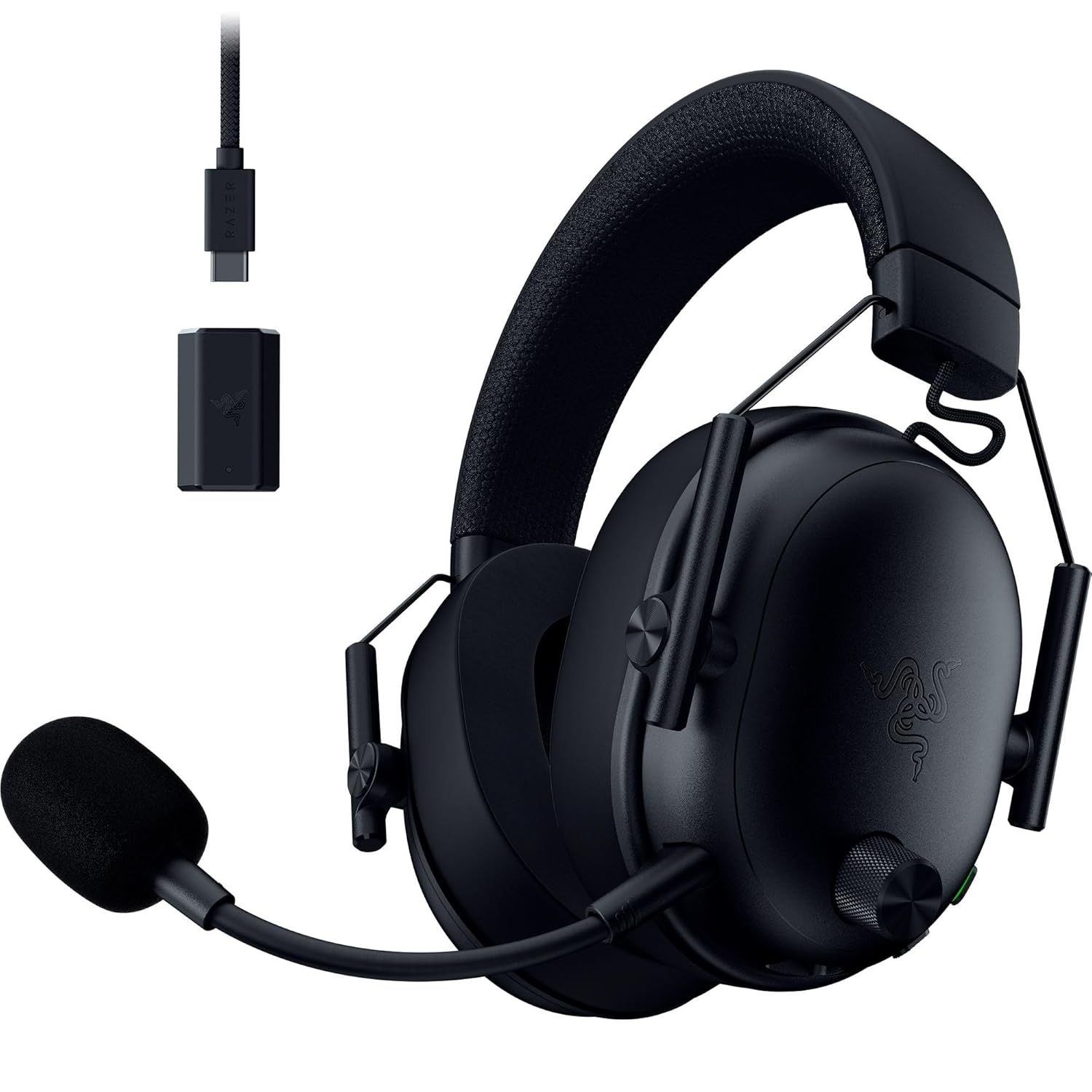
At 270 grams, the BlackShark V3 feels lightweight without sacrificing durability. The hybrid ear cushions combine breathable mesh fabric with leatherette contact surfaces for effective noise isolation and airflow. Memory foam molds to your head shape, and 90-degree rotating earcups allow comfortable neck resting during breaks.
The primarily plastic construction uses high-quality materials that feel rigid and robust. On-ear controls are intuitive—volume wheel, SmartSwitch button, power control, and chat mix dial are all easily accessible. LED indicators clearly show connection status.
Verdict
The Razer BlackShark V3 delivers flagship-level competitive gaming performance at a mid-range price. The industry-leading 10ms latency, TriForce Titanium Gen-2 drivers, and pro-tuned EQ profiles provide genuine competitive advantages. At $149.99, it offers exceptional value by focusing on features that matter for esports while skipping the premium materials and ANC of the $249 V3 Pro.
For competitive FPS players and esports enthusiasts, the BlackShark V3 is an easy recommendation. It matches or exceeds audio quality of significantly more expensive headsets while delivering the fastest wireless performance available. The #1 choice among esports professionals is now accessible to anyone serious about competitive gaming.
Frequently Asked Questions
Based on community census data and common user queries, these are the most frequently discussed topics for this headset.
Will the PC BlackShark V3 work on Xbox?
Not this listing. BadIntent tested the retail split: the Xbox box works on Xbox, PS5, and PC, and the PC box works on PC and PS5 only. The standard V3 has no 3.5mm jack, and USB-C is a wired connection to a computer, not a lead for an Xbox controller. The V3 Pro is the model that ships with a USB-C to 3.5mm cable.
10ms mode is on and the headset dies the next day, or the audio just stops.
HyperSpeed's 10ms mode ships enabled. PC Gamer got Razer's figure for it: a little over 30 hours at 50 percent volume, against about 70 hours with it off and about 25ms on the normal link. On r/razer, leaving that mode on lines up with audio that dies until you power-cycle the headset, and BadIntent had the mic cut out in the same mode. In Synapse, turn Ultra-Low Latency off under Enhancements.
Simultaneous Bluetooth breaks up, but each connection is fine alone.
That matches an October 2025 r/razer report on a standard V3: Bluetooth audio chopped only in simultaneous mode, while 2.4 GHz kept playing. The switch that stopped it was Ultra-Low Latency off. BadIntent's battery split for this headset is about 70 hours on PC at 2.4 GHz, about 48 hours on PS5, and about 35 hours with Bluetooth mixed in.
How is this different from the V3 Pro, the V3 X, and the 2023 V2 Pro?
This is the middle model: titanium 50mm drivers, the same 9.9mm wideband mic class as the 2023 V2 Pro, simultaneous 2.4 GHz and Bluetooth, and no ANC. The V3 Pro is the heavy one, about 367 grams, with bio-cellulose drivers, a 12mm mic, ANC, and a 3.5mm cable. The V3 X makes you toggle Bluetooth and 2.4 GHz instead of mixing them, and it has no THX and no mic EQ. The Gen-2 dongle here is a cabled transmitter, not the thumb dongle from the V2 Pro.
The mic got harsh after a firmware update.
Firmware 1.1.3 did that to sidetone on a new V3 in August 2025. The Discord setup that thread settled on was Synapse, Mic, Mic Enhancement on, Volume Normalization 35, EQ set to Broadcast. BadIntent's note on the 9.9mm capsule is sibilance on S sounds. He put this mic just outside his top five, behind the V3 Pro and the 2023 V2 Pro.
THX makes the game sound metallic and too close.
BadIntent measured THX on the V3 lifting upper mids and treble and adding reverb, so footsteps and room tone sit on your ear. A December 2025 owner coming off a Cloud II called the stock sound metallic and quiet in Arc Raiders until a custom EQ, and a January 2026 buyer said it was odd for video and fine for games in stereo. THX needs Windows, so on a PS5 you get the EQ presets stored on the headset and the game/chat wheel does not mix.
One ear pad is flatter, and my ear hurts after two hours.
A March 2026 buyer had a visibly thinner right pad and pain at about two hours. Razer support sent them to Amazon, and the replacement measured even. Another owner returned multiple V3 pairs and described the cushions as about half as deep as the V2 they already had. BadIntent felt the clamp after about an hour because the hybrid fabric and leatherette pads are thin.
Support & Resources
More from Razer
Discover other headsets in their lineup
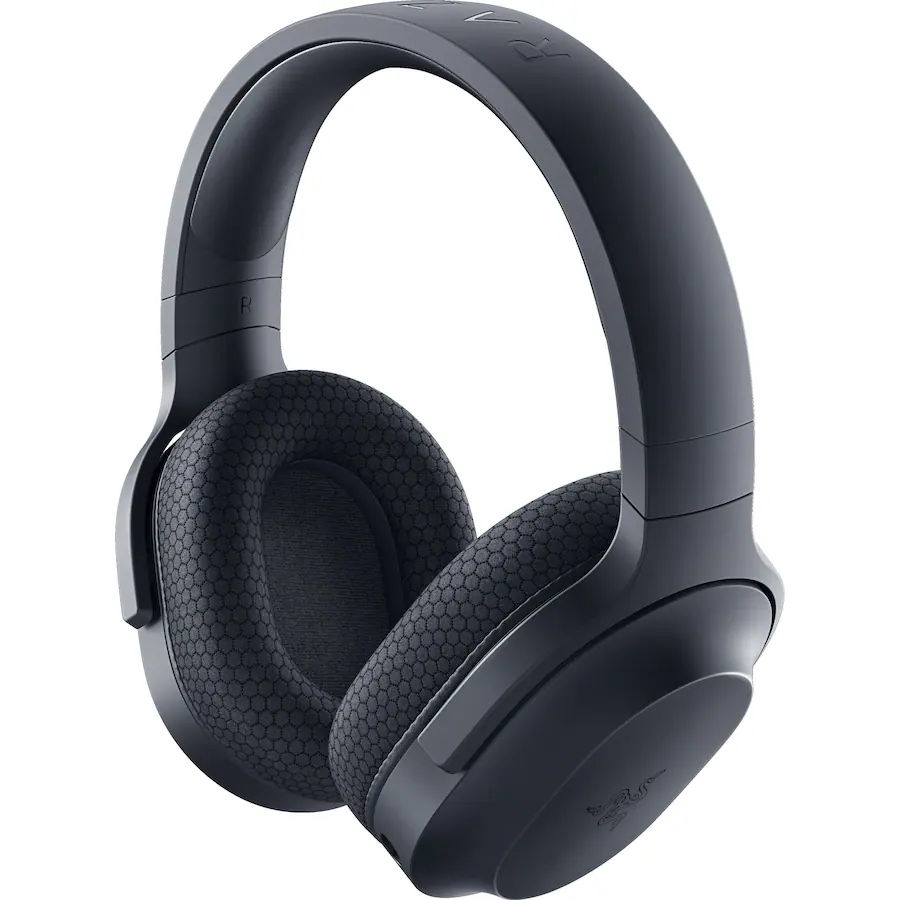
RazerBarracuda X

RazerBarracuda X Chroma