Best Wireless Gaming Headsets in 2026
Wireless in 2026 is a latency and battery decision. These five headsets are the ones worth paying for.
A useful wireless headset in 2026 holds a 2.4GHz link at 20ms or under and lasts more than a weekend on one charge. Bluetooth-only sets and anything under $100 fail that test often enough that they belong in a separate buying guide. These five are the catalog picks that clear it, with a specific job each.
Sub-$100 wireless is covered in the under-$100 guide. This list starts at the Cloud III Wireless and stops at the Maxwell 2.
1. Best sound
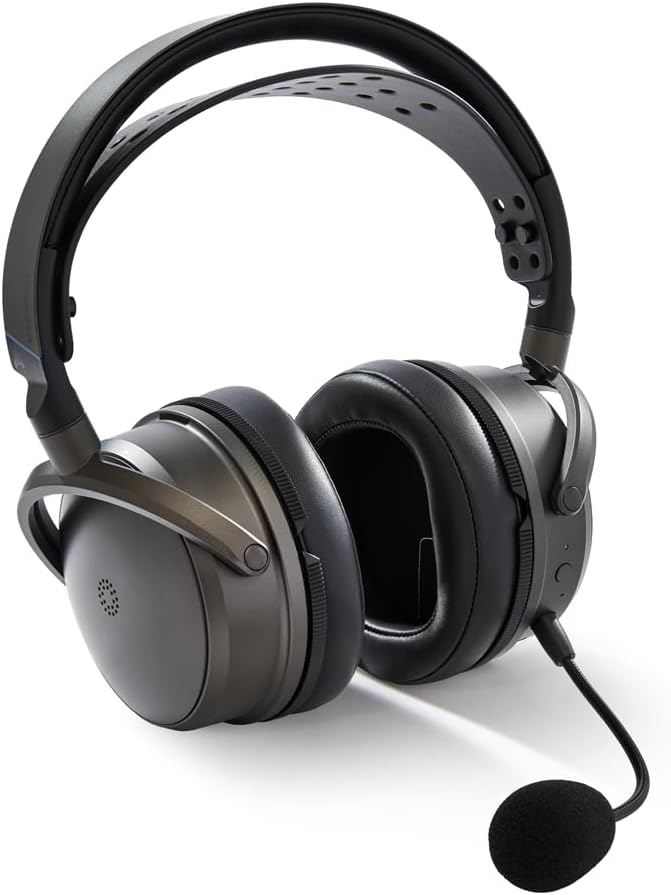
Audeze Maxwell 2
As an Amazon Associate, we earn from qualifying purchases. This helps support our detailed gear research and guide creation at no extra cost to you.
The Maxwell 2 is $329, with 90mm planar magnetic drivers, an 80-hour battery, and 18ms latency on 2.4GHz. The response is listed at 10Hz–50kHz. Dynamic drivers in this ranking do not match that transient speed, and the 80-hour figure means most people charge it weekly, not nightly.
It weighs 560g. That is the heaviest set here, and the redesigned headband does not change the scale reading. Bluetooth 5.3 uses a Priority switch: an incoming call mutes game audio instead of mixing with it, so phone music during a match is off the table. It is not native Xbox Wireless. EQ sits in Audeze HQ.
Buy it for planar detail on PC or PlayStation if 560g is acceptable. Skip it if you need simultaneous phone audio, play Xbox without a dongle, or already returned the original Maxwell for weight.
2. Best daily driver
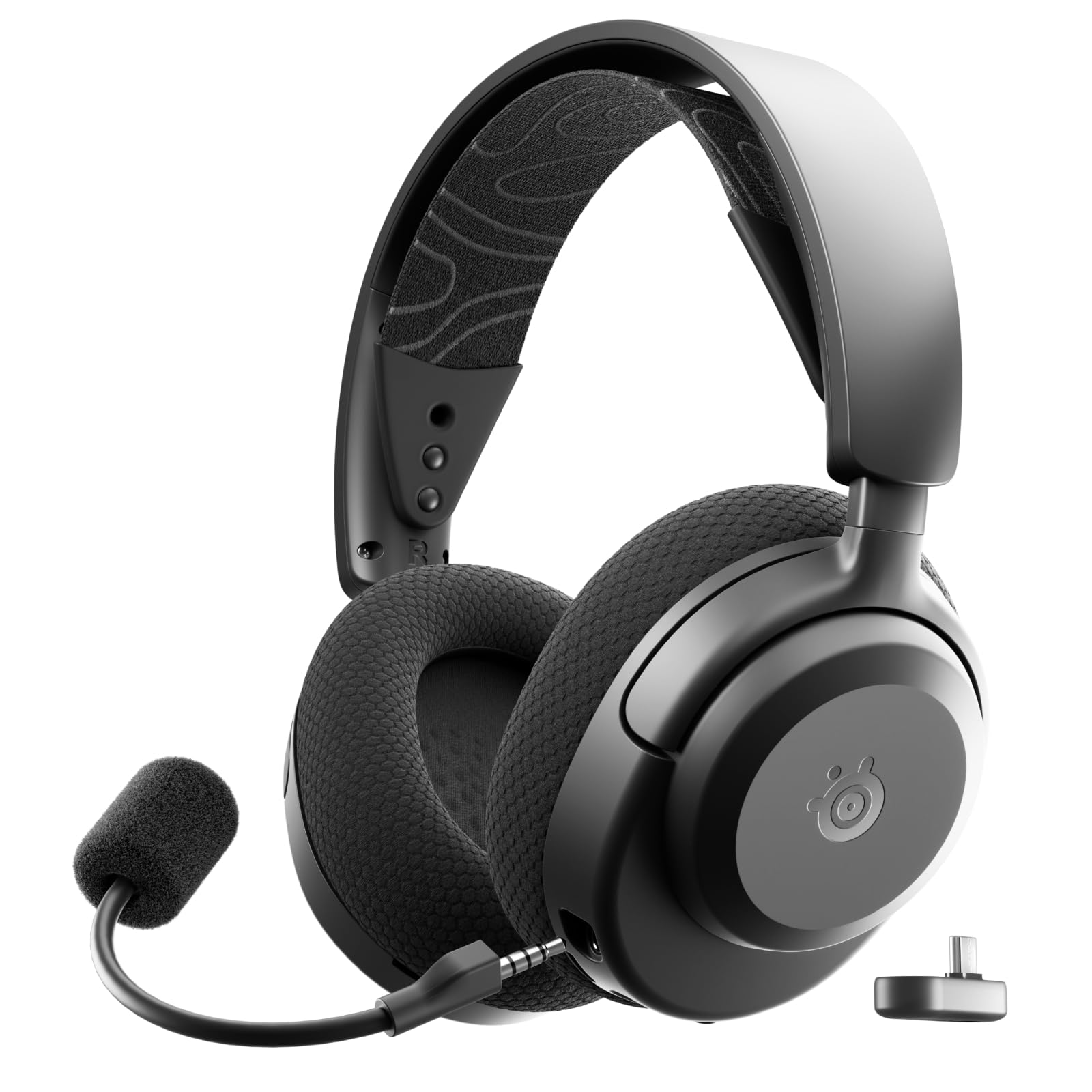
SteelSeries Arctis Nova 7 Gen 2
As an Amazon Associate, we earn from qualifying purchases. This helps support our detailed gear research and guide creation at no extra cost to you.
The Nova 7 Gen 2 is $199.99, 326g, and rated for 54 hours on 2.4GHz at 18ms. Fifteen minutes on USB-C returns about 6 hours. Game audio stays on the dongle while Bluetooth 5.3 holds the phone, and an incoming call mutes game chat, then restores it on hang-up. The right earcup has a ChatMix wheel.
The 40mm drivers cover 20Hz–22kHz and lean toward mids and highs, which is the right tilt for footsteps and the wrong tilt if you want bass-heavy single-player. This variant does not include Xbox. That is the 7X Gen 2, with a dongle switch, not this PC and PlayStation model. Sonar inside SteelSeries GG adds a 10-band EQ on PC. Console players do not get that app.
Buy it if one headset has to cover PC or PlayStation plus a phone for a week of sessions. Skip it for Xbox, and skip it if you want planar resolution instead of a 40mm dynamic driver.
3. Best battery
HyperX Cloud III Wireless

As an Amazon Associate, we earn from qualifying purchases. This helps support our detailed gear research and guide creation at no extra cost to you.
The Cloud III Wireless is $169.99 with a 120-hour battery, 53mm angled drivers, and 20ms latency. Weight is 342g. The 10mm detachable mic and DTS:X support are the extras.
There is no Bluetooth and no native Xbox radio. The listed wireless range is 20 meters, shorter than the 30-meter figures on the Nova 7 and BlackShark V3 Pro. Leave the dongle on the desk, not across the house.
The tuning matches the wired Cloud III: controlled bass, clear mids, enough separation for competitive play. NGENUITY handles EQ on PC. You do not get a second device stream, RGB, or ANC. The product is a 2.4GHz headset that you forget to charge.
Buy it if charging is the problem you are trying to solve on PC or PlayStation. Skip it if you need a phone link in the same session, or if the dongle has to live far from the seat.
4. Best competitive latency
Razer BlackShark V3 Pro

As an Amazon Associate, we earn from qualifying purchases. This helps support our detailed gear research and guide creation at no extra cost to you.
The BlackShark V3 Pro is $249.99 with a listed 10ms HyperSpeed link, 70-hour battery, and 50mm bio-cellulose drivers. That 10ms figure is the lowest 2.4GHz latency in this ranking. Weight is 367g. It mixes 2.4GHz and Bluetooth at the same time, and a four-mic ANC mode can be switched off from the earcup. The mic is a detachable boom.
Platforms in the catalog are PC, PlayStation 5, Switch, and mobile. Xbox is not one of them. THX Spatial Audio and the pro EQ presets live in Synapse 4, and those presets can be stored on the headset for a PC that does not have the app open. ANC is useful against a PC fan and the wrong tool in a quiet ranked match, where the processing is one more layer on top of the mix.
Buy it for PC or PlayStation competitive play when latency is the spec you sort by. Skip it for Xbox, and skip the ANC button once the room is already quiet.
5. Best for two platforms at once
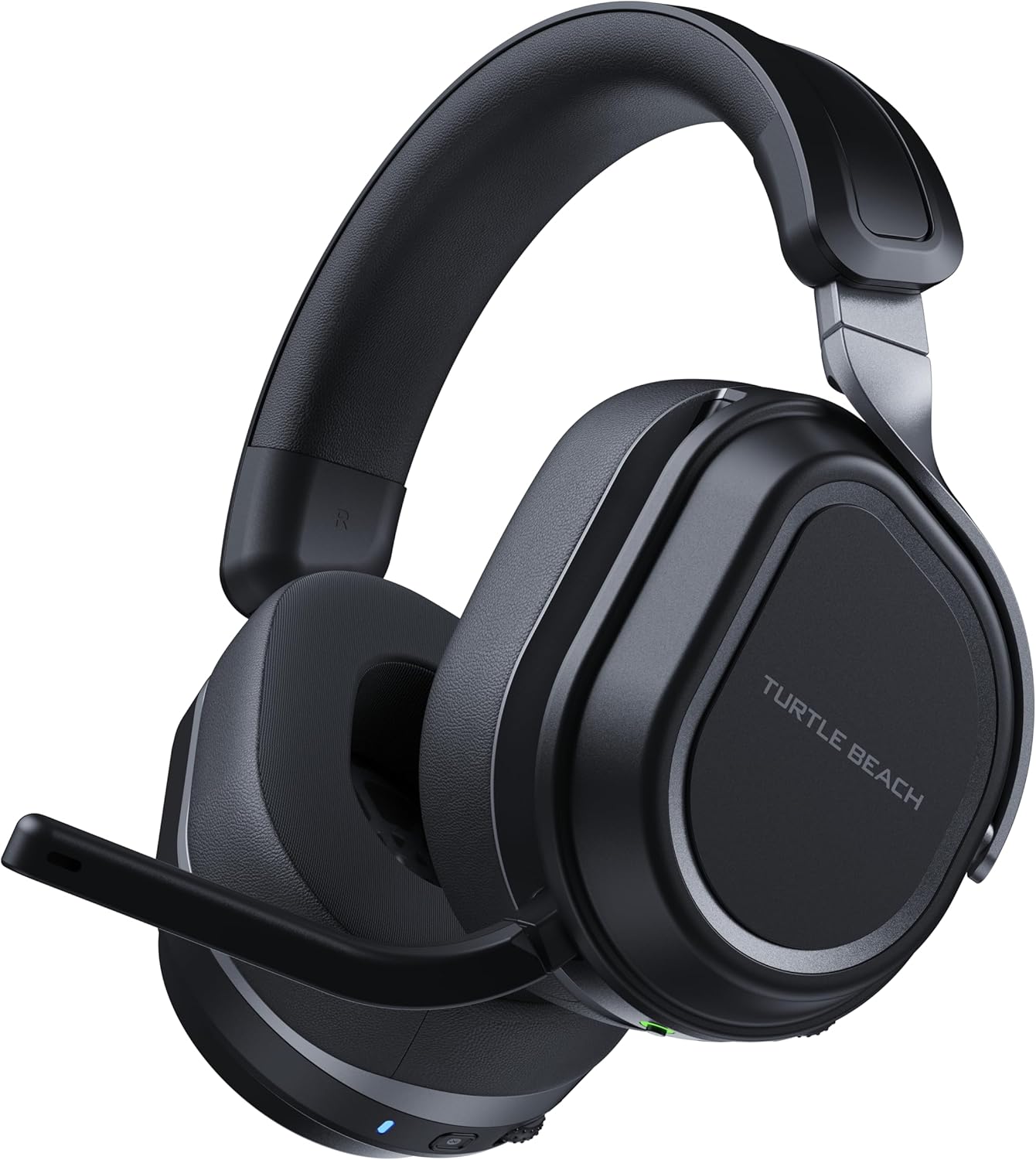
Turtle Beach Stealth 700 Gen 3
As an Amazon Associate, we earn from qualifying purchases. This helps support our detailed gear research and guide creation at no extra cost to you.
The Stealth 700 Gen 3 is $199.99 with two USB transmitters, a CrossPlay button that swaps between them, 60mm Eclipse drivers, and an 80-hour battery. Bluetooth 5.2 stays up beside the 2.4GHz link, with a separate volume path for the phone. A 15-minute charge is rated for about 3 hours. The catalog does not list a latency number, so this is not the pick when you are sorting by milliseconds.
It weighs 408g, with a fixed flip-to-mute boom rather than a detachable mic. The tuning is bass-forward. That suits action games and works against footstep clarity unless you pull the low end down in Swarm II on PC. It is not native Xbox Wireless. The Xbox path is one of the two transmitters, same as PlayStation and PC.
Buy it when two machines are on at the same time and you are tired of moving a dongle. Skip it if you want a light headset, a detachable mic, or a published sub-20ms latency spec.
Take the Maxwell 2 for sound, the Nova 7 Gen 2 for a week of PC or PlayStation use, the Cloud III Wireless if you refuse to charge, the BlackShark V3 Pro for the 10ms link, and the Stealth 700 Gen 3 when two transmitters solve a real desk. Stay on a wired headset if you are under $100 or you need zero battery math. None of these five is a native Xbox Wireless headset.

Richard Scott
Headset Expert & Web Developer
Web developer and lifelong gamer. Spends too much time on golf, hockey, and finding the right headset. Lives with a dog who has no opinions on audio quality.