Logitech G Pro X Wireless Lightspeed
Wireless esports headset featuring LIGHTSPEED 2.4GHz wireless technology, 50mm PRO-G drivers, Blue VO!CE microphone processing, and 20+ hour battery life. Based on award-winning Pro X design.
- Wireless
- 50mm Dynamic Drivers
- Detachable Boom Mic
- 370g
*Affiliate Link: We may earn a commission from qualifying purchases.
Community Evaluation
Performance Tiers
Community consensus based on aggregated review data.
Fit Recommendation
Optimized for ergonomic comfort over long sessions.
Based on long-term clamping force, headband expansion, and cup depth volume.
Review Consensus
Aggregated from 950+ verified sources.
Technical Specifications
Audio
Connectivity
Microphone
Build & Features
Overview
The Logitech G Pro X Wireless Lightspeed launched in August 2020 as the wireless evolution of the award-winning Pro X wired headset, directly addressing the most common request from professional esports athletes: “We love the Pro X, but we want wireless.” After a year of the wired model establishing itself as a legitimate professional-grade headset with exceptional Blue VO!CE microphone technology and solid audio performance, Logitech answered by integrating its proprietary LIGHTSPEED wireless technology—the same low-latency 2.4GHz system that powers its championship-winning gaming mice—into the Pro X design. At $199.99, positioned $70 above the wired model, the wireless variant offered freedom from cables while maintaining the professional features that made the original successful.
What distinguished the Pro X Wireless from other wireless gaming headsets in 2020 was its uncompromising approach to wireless performance. While many manufacturers offered wireless headsets with noticeable latency, inconsistent connections, or mediocre battery life, Logitech’s LIGHTSPEED technology delivered sub-20ms latency, rock-solid connectivity at ranges exceeding 40 feet, and genuine 20+ hour battery life. Combined with the same PRO-G 50mm drivers, Blue VO!CE microphone processing, and dual ear pad system from the wired model, the Pro X Wireless provided a complete wireless professional package that justified its premium positioning in the increasingly competitive wireless gaming headset market.
Key Features
LIGHTSPEED Wireless Technology: The centerpiece of the Pro X Wireless is Logitech’s proprietary LIGHTSPEED 2.4GHz wireless system, developed through years of refinement in their gaming mouse lineup. This technology delivers exceptional wireless performance with sub-20ms latency that rivals wired connections, making it imperceptible during gameplay. The wireless range extends beyond Logitech’s stated 42 feet (13 meters) in real-world testing—users consistently maintain solid connections at 50-60 feet in open environments, only encountering dropouts when concrete walls or multiple obstacles intervene. The USB-A dongle is larger than those found on Logitech’s mice, housing more powerful wireless components to maintain this exceptional performance.
PRO-G 50mm Hybrid Mesh Drivers: Carried over directly from the wired Pro X, these proprietary drivers feature Logitech’s unique hybrid mesh construction combining multiple materials for optimized acoustic performance. The design prioritizes clarity and positional accuracy essential for competitive gaming—footsteps, reloads, and environmental cues remain distinct even during chaotic gameplay moments. The enhanced bass response adds impact to explosions and gunfire without muddying the critical mid-range frequencies where voice communication lives. While not as revolutionary as the later graphene drivers in the Pro X 2, these PRO-G drivers offer consistent, reliable performance that professional players depend on for tournament play.
Blue VO!CE Microphone Technology: The integration of Blue Microphones’ professional broadcast technology remains one of the Pro X Wireless’s strongest differentiators. Through the G HUB software, the detachable 6mm cardioid boom microphone gains access to real-time voice filters including noise reduction, compression, de-essing, and parametric EQ typically found only in dedicated streaming setups. The preset filters like “Broadcaster” or “Low voice - loud” provide instant improvements to voice quality, while advanced users can customize settings extensively. This transforms the Pro X Wireless into both a gaming headset and a legitimate broadcasting tool, eliminating the need for separate microphone equipment for many streamers.
Extended Battery Life: Logitech’s 20+ hour battery life rating proves conservative in real-world usage. Most users report 24-28 hours of continuous use at moderate volume levels, with some achieving 30+ hours with DTS processing disabled. This means you can game for multiple days without worrying about charging, and even when the battery runs low, the headset continues functioning during charging via USB-C. The battery management is intelligent—the headset automatically enters sleep mode when idle to preserve charge, and waking it is instantaneous with any button press. This reliability is crucial for professional players and streamers who need consistent performance without interruption.
DTS Headphone:X 2.0 Surround Sound: Through G HUB software on PC, the Pro X Wireless gains access to DTS Headphone:X 2.0 processing, creating an immersive virtualized 7.1 surround sound experience. The spatial audio significantly enhances positional awareness—you can reliably determine if sounds originate from above, below, or at various angles around your position. This proves particularly valuable in competitive FPS titles where audio positioning provides crucial tactical information. While some purists prefer natural stereo presentation, the surround processing offers genuine competitive advantages when properly configured, with adjustable settings allowing users to tune the effect to their preference.
Audio Quality
The PRO-G 50mm drivers deliver the same reliable, competitive-focused audio signature as the wired Pro X. The frequency response prioritizes clarity and accuracy over flashy bass or exaggerated treble, creating a sound profile optimized for identifying enemy positions and crucial audio cues. In competitive scenarios—the primary use case—the audio performance excels. Footsteps in games like CS:GO, Valorant, and Warzone are crisp and distinct, environmental sounds maintain separation during complex audio scenes, and directional information proves accurate for positioning enemies.
The wireless implementation maintains audio quality without noticeable degradation compared to wired connections. LIGHTSPEED’s bandwidth and low latency ensure that subtle audio details aren’t lost in transmission, and there’s no audible compression or artifacts that plague some wireless headsets. The 20Hz-20kHz frequency response is captured with good balance—bass has presence without overwhelming the mix, mids remain clean and defined for voice communication, and treble provides detail without harshness during extended sessions.
One area where the wireless nature becomes apparent is the lack of any wired option. Unlike competitors that include 3.5mm backup cables, the Pro X Wireless operates exclusively through its 2.4GHz connection. This means it cannot function with Xbox consoles (which lack USB-A support), mobile devices, or any system without a compatible USB port. For PC, PlayStation, and docked Switch users, this limitation rarely matters, but it does reduce versatility compared to hybrid wireless/wired designs.
The DTS Headphone:X 2.0 processing creates convincing surround sound when enabled, enhancing immersion in single-player games and providing genuine competitive advantages in multiplayer titles. The processing adds minimal latency and can be toggled on/off based on preference or game type. The 35-ohm impedance means the drivers are easy for the internal amplifier to drive, providing ample volume headroom without distortion even at higher settings.
For music and media consumption, the Pro X Wireless sounds good but not exceptional. The gaming-focused tuning doesn’t translate to the most engaging musical experience—audiophile-grade headphones offer more natural tonal balance and wider soundstage. However, for general media consumption between gaming sessions, the audio quality remains perfectly serviceable.
Comfort & Build
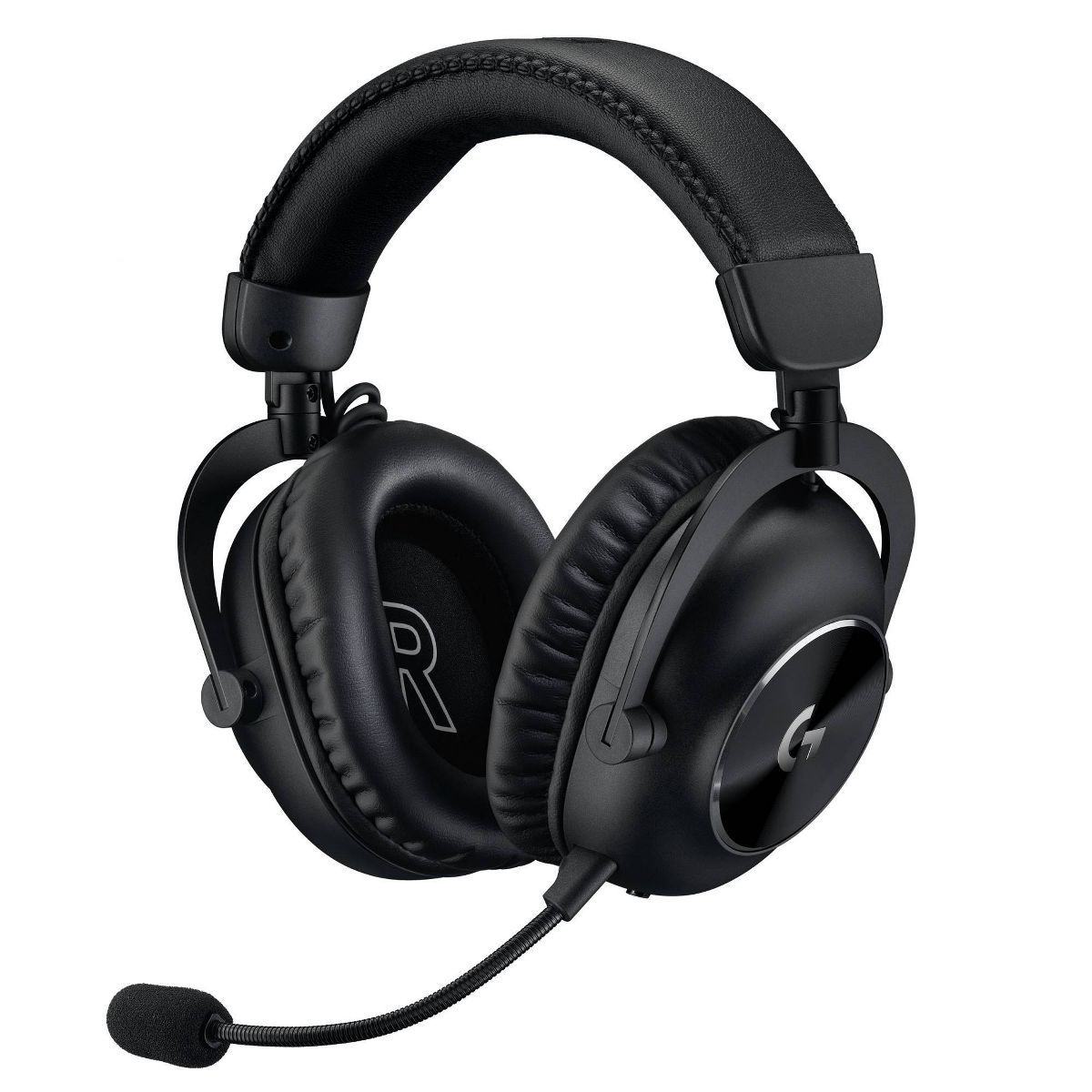
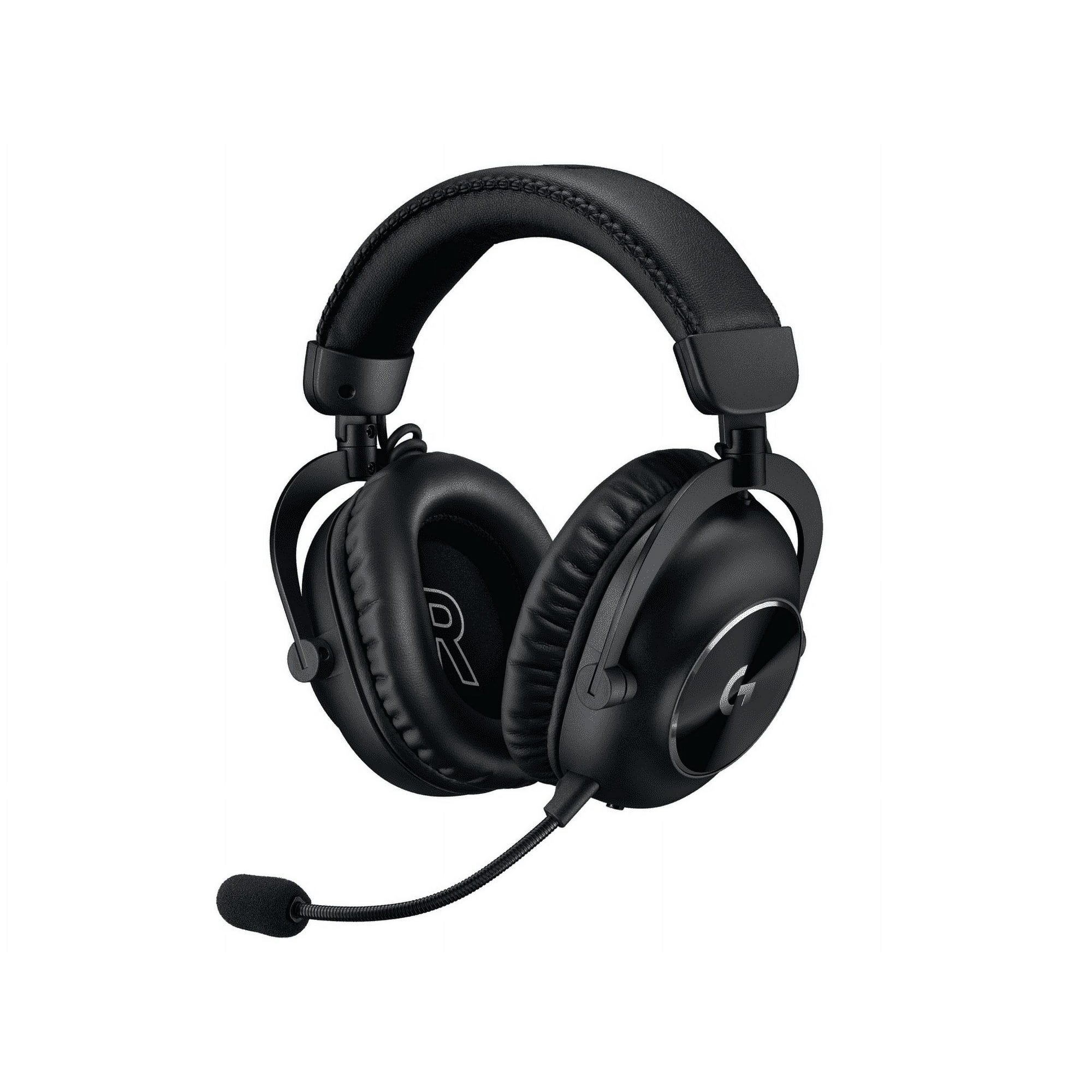
The Pro X Wireless inherits the same professional aesthetic as its wired predecessor—clean lines, no RGB lighting, understated elegance. The frame combines aluminum forks with a steel-reinforced headband for durability without excessive bulk. At 370 grams (13.1 ounces), the wireless model is noticeably heavier than the 320-gram wired version due to the battery and wireless components. This weight places it on the heavier end of wireless gaming headsets, though the distribution is managed well enough that it doesn’t become uncomfortable immediately.
The build quality feels robust and premium. The steel and aluminum construction provides rigidity without creaking or flexing, and all components feel designed for years of daily use and frequent travel. The exposed coiled cables running to each ear cup add visual interest while maintaining the professional aesthetic. The machined aluminum accents on the ear cups provide subtle style without gaming-centric flash.
Comfort proves to be a mixed bag depending on head size and personal sensitivity. The adjustable headband features adequate padding wrapped in leatherette, distributing weight across the top of your head reasonably well. However, the clamping force is notably firm—what some reviewers describe as feeling “tight” or “constricting” during extended wear. For users with average head sizes, comfort remains acceptable for 2-3 hour sessions before fatigue sets in. Those with larger heads or glasses consistently report pressure points developing sooner.
The inclusion of dual ear pad sets—leatherette and velour—adds significant value. The leatherette pads provide better noise isolation and enhanced bass response, making them ideal for competitive gaming in noisy environments. The velour pads breathe better and reduce heat buildup during marathon sessions, though they sacrifice some isolation and bass. Having both options allows users to optimize for different scenarios and preferences. The ear cups themselves are properly sized with sufficient depth to prevent drivers from touching ears.
The detachable boom microphone connects via a 3.5mm port with a secure connection that won’t accidentally disconnect. The mic arm offers good flexibility for positioning while maintaining position reliably. The included foam windscreen effectively reduces plosives without muffling voice quality.
The left ear cup houses all controls in an intuitive layout: power switch, volume wheel (with excellent tactile feedback and resistance), mic mute button (with subtle red indicator), and USB-C charging port. These controls are easy to identify by touch during gameplay without requiring visual confirmation.
Verdict
The Logitech G Pro X Wireless Lightspeed successfully translated the wired Pro X’s professional-grade features into a wireless package when it launched in 2020, maintaining audio quality, microphone performance, and build quality while adding exceptional wireless convenience. The LIGHTSPEED wireless technology delivered on its promises—imperceptible latency, rock-solid connectivity, and genuine 20+ hour battery life made this a reliable wireless solution for competitive gaming and professional streaming. For players who prioritized wireless freedom over wired versatility and could work within its wireless-only limitation, the Pro X Wireless represented one of the best wireless gaming headsets of its era.
However, time and evolution have revealed some limitations that became more apparent as competition intensified. The 370-gram weight and firm clamping force, while acceptable for some users, proved uncomfortable for others during extended sessions—particularly those with larger heads or glasses. The lack of any wired connectivity option (not even a backup 3.5mm cable) limited versatility compared to newer designs offering both wireless and wired modes. The microphone, while featuring excellent Blue VO!CE processing, used the same capsule that reviewers consistently noted didn’t quite match the elevated standards of newer competitors. And the wireless-only design meant no Xbox compatibility and no mobile use, restricting the headset to PC, PlayStation, and docked Switch.
In 2024-2026, the Pro X Wireless faces an identity crisis. The Pro X 2 Lightspeed ($249) offers graphene drivers, Bluetooth connectivity, 3.5mm wired backup, 50-hour battery life, improved ergonomics with swiveling hinges, and broader compatibility—making it superior in virtually every metric for just $50 more. Street prices for the original Pro X Wireless have dropped to $130-160, improving the value proposition, but even at these prices it competes with newer mid-range options that offer more modern feature sets.
Who Should Buy: The Logitech G Pro X Wireless makes sense for budget-conscious buyers who can find it on sale for $130-150 and primarily game on PC or PlayStation where its wireless-only design isn’t limiting. Competitive gamers who prioritize LIGHTSPEED’s proven low-latency performance over newer features will appreciate the reliable wireless connectivity. Streamers who will leverage Blue VO!CE technology extensively can justify the price for the microphone processing alone. Anyone who already owns and loves the wired Pro X but wants wireless freedom will find this a natural upgrade path.
Who Should Consider Alternatives: If you need versatility across multiple devices including Xbox or mobile, look at headsets offering both wireless and wired connectivity like the SteelSeries Arctis Nova Pro or even the newer Pro X 2. Users with larger heads or those sensitive to clamping pressure should try before buying or consider lighter, more ergonomic designs. If you’re buying at full retail price, spending an extra $50 for the Pro X 2 provides significantly better value with modernized features. Anyone who prioritizes maximum battery life should look at options like the HyperX Cloud Alpha Wireless (300+ hours) or even the Pro X 2 (50+ hours).
The Pro X Wireless represented Logitech successfully evolving the Pro X into a wireless format, delivering professional-grade wireless performance in 2020. It established LIGHTSPEED wireless as viable for competitive gaming headsets and proved that wireless didn’t require compromising audio quality or microphone performance. However, the gaming headset market evolved rapidly, and features that seemed cutting-edge in 2020—20-hour battery life, wireless-only connectivity, 370-gram weight—became merely acceptable or even limiting by 2024-2026 standards.
For players who can find it at discounted prices and whose usage patterns align with its strengths—PC/PlayStation gaming, shorter sessions, Blue VO!CE streaming—the Pro X Wireless remains a solid option. But recommending it at full retail price becomes difficult when both newer Logitech models and competitive offerings provide better value propositions. It’s a headset that did its job exceptionally well when released, but time and progress have moved the goalposts.
Frequently Asked Questions
Based on community census data and common user queries, these are the most frequently discussed topics for this headset.
Does the G Pro X Wireless work with Xbox?
No. This headset is wireless-only via the 2.4GHz Lightspeed dongle and lacks a 3.5mm backup port. Xbox consoles do not support standard USB audio adapters, making this headset incompatible. PC and PlayStation users are supported, but Xbox owners should look at the Pro X 2 or wired models.
Is the microphone worse than the wired G Pro X?
Signal degradation over wireless is noticeable compared to the wired version. While Blue VO!CE helps, the raw input is thinner and more compressed. Users switching from the wired model often report a drop in clarity, though it remains adequate for Discord and tactical chat.
Why do I hear a faint white noise or static when no audio is playing?
High-sensitivity drivers paired with the internal wireless amp cause a persistent noise floor. It's most audible at 100% volume in quiet rooms. Lowering the physical volume wheel on the headset to 80% and offsetting it with higher Windows volume typically makes the hiss imperceptible.
What's the real battery life compared to the 20-hour rating?
Logitech's rating is conservative. In real-world testing at 50% volume, most users get 25-28 hours on a full charge. Disabling DTS:X spatial audio extends this further. It easily handles three days of heavy gaming before hitting the 10% low-battery beep.
How sensitive is the Lightspeed connection to interference?
The signal is rock-solid unless the dongle is buried in a rear USB port or a crowded hub. Moving the receiver to a front-panel port or using a USB extension cable solves most 'clicking' or dropout issues reported on Reddit. High-traffic 2.4GHz Wi-Fi environments can occasionally cause pops.
Support & Resources
More from Logitech
Discover other headsets in their lineup