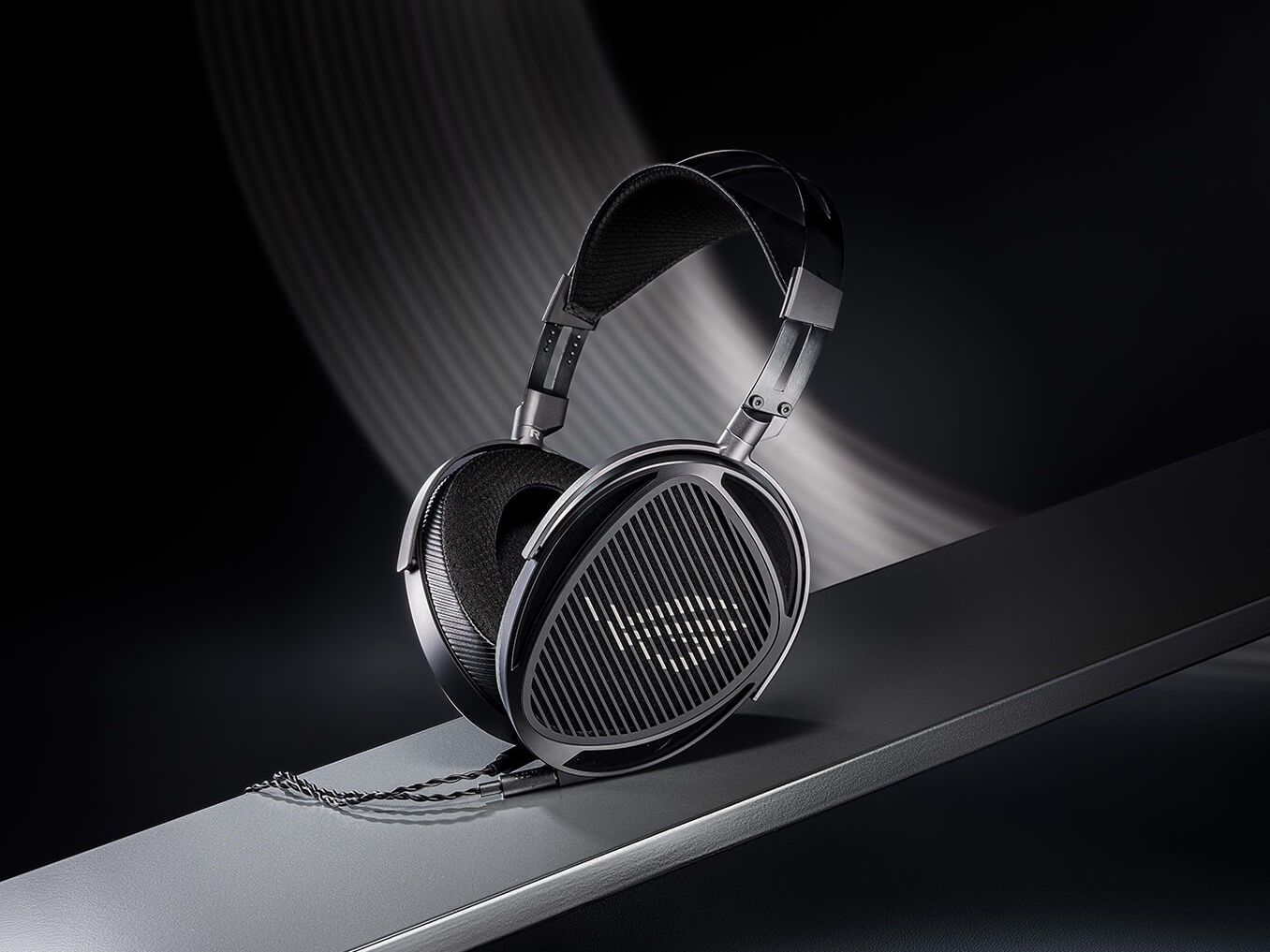
ASUS ROG Kithara Preview: HIFIMAN Technology Meets Gaming
ASUS partners with audiophile legend HIFIMAN to create a $300 open-back gaming headset with 100mm planar magnetic drivers. Can it bridge the gap between competitive gaming and Hi-Fi audio?
ASUS is making a bold statement with the ROG Kithara, a new $300 gaming headset that challenges conventional wisdom about what gamers actually need. Rather than loading up on RGB lighting, wireless connectivity, and virtual surround sound processing, ASUS partnered with HIFIMAN—one of the most respected names in high-end personal audio—to deliver what they’re calling “audiophile-grade sound for tactical in-game advantages.” The result is one of the most unusual gaming headsets we’ve seen: an open-back design with massive 100mm planar magnetic drivers.
The HIFIMAN Partnership
This isn’t just ASUS licensing HIFIMAN’s name for marketing purposes. The Kithara uses genuine HIFIMAN technology, including their Neo Supernano diaphragm and Stealth Magnet design—the same acoustic innovations found in HIFIMAN’s dedicated audiophile headphones. These 100mm drivers are co-tuned by ROG engineers, power gamers, and HIFIMAN’s acoustic team specifically for gaming applications.
Planar magnetic drivers work differently than the dynamic drivers found in nearly all gaming headsets. Instead of a voice coil pushing a cone-shaped diaphragm, planar magnetics use a thin, flat diaphragm suspended between arrays of magnets. The entire surface moves uniformly, resulting in faster transient response, lower distortion, and more accurate sound reproduction. It’s technology typically reserved for headphones costing $500 or more.
The Kithara’s drivers deliver an ultrawide frequency response of 8Hz to 55kHz—far exceeding human hearing but indicative of the driver’s technical capabilities. More importantly for gaming, ASUS claims these drivers provide superior transient response, meaning sounds start and stop more precisely. In competitive games, this translates to hearing footsteps, reloads, and directional cues with sharper definition.
Open-Back Design: A Gaming Rarity
Most gaming headsets use closed-back designs that seal around your ears, blocking external sound and preventing audio leakage. The Kithara goes the opposite direction with an open-back architecture that ASUS says creates an “ultrawide soundstage for precise imaging.” The earcups feature diamond-cut metal grilles that allow air and sound to flow freely.
Open-back headphones are beloved by audiophiles for their natural, spacious sound, but they’re rare in gaming for good reason: they offer zero noise isolation and leak sound to your surroundings. ASUS is betting that serious gamers will accept these tradeoffs for improved positional accuracy. The company claims the open design prevents low frequencies from masking critical audio cues, making it easier to distinguish footsteps from explosions.
During development, ASUS tested multiple prototypes in an anechoic chamber using dummy heads to optimize the internal acoustic structures and venting ratios. The result is an earcup design that balances form, function, and the aggressive ROG aesthetic. Whether the open-back approach actually provides competitive advantages over well-tuned closed-back alternatives remains to be tested, but the theory is sound.
MEMS Microphone Technology
Unlike pure audiophile headphones that omit microphones entirely, the Kithara includes what ASUS calls a “full-band MEMS boom microphone.” MEMS (Micro-Electro-Mechanical Systems) microphones are silicon-based chips that offer several advantages over the electret condenser mics found in most gaming headsets.
The Kithara’s MEMS mic delivers a 20Hz–20kHz frequency response—significantly wider than typical gaming mics—with a signal-to-noise ratio of 74dB and total harmonic distortion under 0.1%. These specs suggest voice capture that’s cleaner and more natural-sounding than standard gaming headset microphones. The mic attaches to a separate cable with dedicated audio and microphone wiring to eliminate crosstalk between the two signals.
Connectivity: Maximum Versatility
Here’s where the Kithara gets interesting for different use cases. ASUS includes multiple cable options to accommodate everything from audiophile setups to casual console gaming:
Balanced Cable with 3-in-1 Swappable Plugs: Features interchangeable 4.4mm balanced, 6.3mm, and 3.5mm single-ended connectors for use with high-end DACs and amplifiers. The 4.4mm balanced connection enables higher power output with lower noise and crosstalk.
Microphone Cable: Separate 3.5mm plugs for audio and mic, designed for PC gaming with dual 3.5mm jacks or using the included USB-C adapter.
USB-C to Dual 3.5mm Adapter: Enables audiophile-grade sound on devices that don’t have sufficient power output through standard headphone jacks.
Both earcups have 3.5mm inputs, so you can connect cables on either side. The included accessories also include two sets of ear pads—leatherette-with-fabric for focused sound and breathable comfort, plus velour pads for softer fit and warmer acoustics.
Build Quality and Comfort
The Kithara features an aluminum frame with eight adjustment levels, co-designed by Danish industrial designer Jacob Wagner. The headband uses a three-layer construction with leatherette, breathable mesh, and memory foam to distribute weight across the head. ASUS claims the extended headband design minimizes pressure on the lower cheek during long gaming sessions.
The large oval earcups accommodate various ear shapes, and ASUS carefully tuned the earcup angle to balance clamping force while minimizing jaw pressure. The diamond-cut metal plates with ROG detailing complete the premium aesthetic. Inline controls on the microphone cable include a volume wheel and mute switch with LED indicator.
The Value Proposition
At $299.99, the Kithara sits in a unique position. It’s expensive for a wired gaming headset, but relatively affordable for planar magnetic technology. The question is whether it successfully serves both audiences.
For gamers who only care about competitive performance, the Kithara’s open-back design and lack of virtual surround processing might feel like steps backward. The absence of wireless connectivity, RGB lighting, and software EQ could be dealbreakers for those expecting full-featured gaming peripherals.
But for audio enthusiasts who also game, the Kithara offers something genuinely different: legitimate Hi-Fi performance at a gaming-friendly price point. You’re getting HIFIMAN planar magnetic technology, versatile connectivity for multiple devices, and the ability to use it with high-end audio equipment—all while maintaining gaming functionality with a quality microphone.
The Competitive Landscape
The Kithara doesn’t have many direct competitors. Most open-back gaming headsets like the Sennheiser Game One or Audio-Technica ATH-ADG1X use traditional dynamic drivers and cost significantly less. Dedicated planar magnetic headphones from HIFIMAN typically start around $400-500 without gaming features.
The closest comparison might be the Drop + EPOS PC38X, another audiophile-focused open-back gaming headset, but it uses 40mm dynamic drivers and costs $170. The Kithara is betting that planar magnetic technology and HIFIMAN pedigree justify the premium.
Who Should Be Excited
The ROG Kithara seems purpose-built for a specific audience:
Audio enthusiasts who game: If you already own a DAC/amp and appreciate high-fidelity audio, the Kithara lets you use the same equipment for gaming without sacrificing competitive features.
Content creators: The combination of excellent audio quality and MEMS microphone makes this viable for streaming, recording, and production work beyond gaming.
Multi-device users: The cable versatility means you can connect to PC, consoles, mobile devices, and audiophile equipment without needing multiple headsets.
Competitive players in quiet environments: If you game in a private space where sound leakage isn’t an issue, the open-back design could provide spatial advantages.
The Bottom Line
The ASUS ROG Kithara represents an ambitious attempt to bridge two worlds that rarely overlap: audiophile-grade personal audio and competitive gaming. By partnering with HIFIMAN and focusing on acoustic fundamentals rather than gaming gimmicks, ASUS has created something genuinely distinctive.
Whether the $300 price tag is justified depends entirely on your priorities. If you want wireless connectivity, active noise cancellation, RGB lighting, or plug-and-play convenience, look elsewhere. But if you value sound quality above all else and want a single headset that serves double duty for gaming and Hi-Fi listening, the Kithara deserves serious consideration.
We’re eager to test how those massive planar magnetic drivers perform in real-world gaming scenarios. Can they actually provide competitive advantages, or are they overkill for most players? Does the open-back design enhance positional awareness enough to justify the lack of isolation? And how does the MEMS microphone compare to traditional gaming headset mics?
The ROG Kithara launches soon at $299.99 through ASUS and major retailers. We’ll have a full review once we can spend time with the final production unit.

Richard Scott
Headset Expert & Web Developer
Web developer and lifelong gamer. Spends too much time on golf, hockey, and finding the right headset. Lives with a dog who has no opinions on audio quality.